

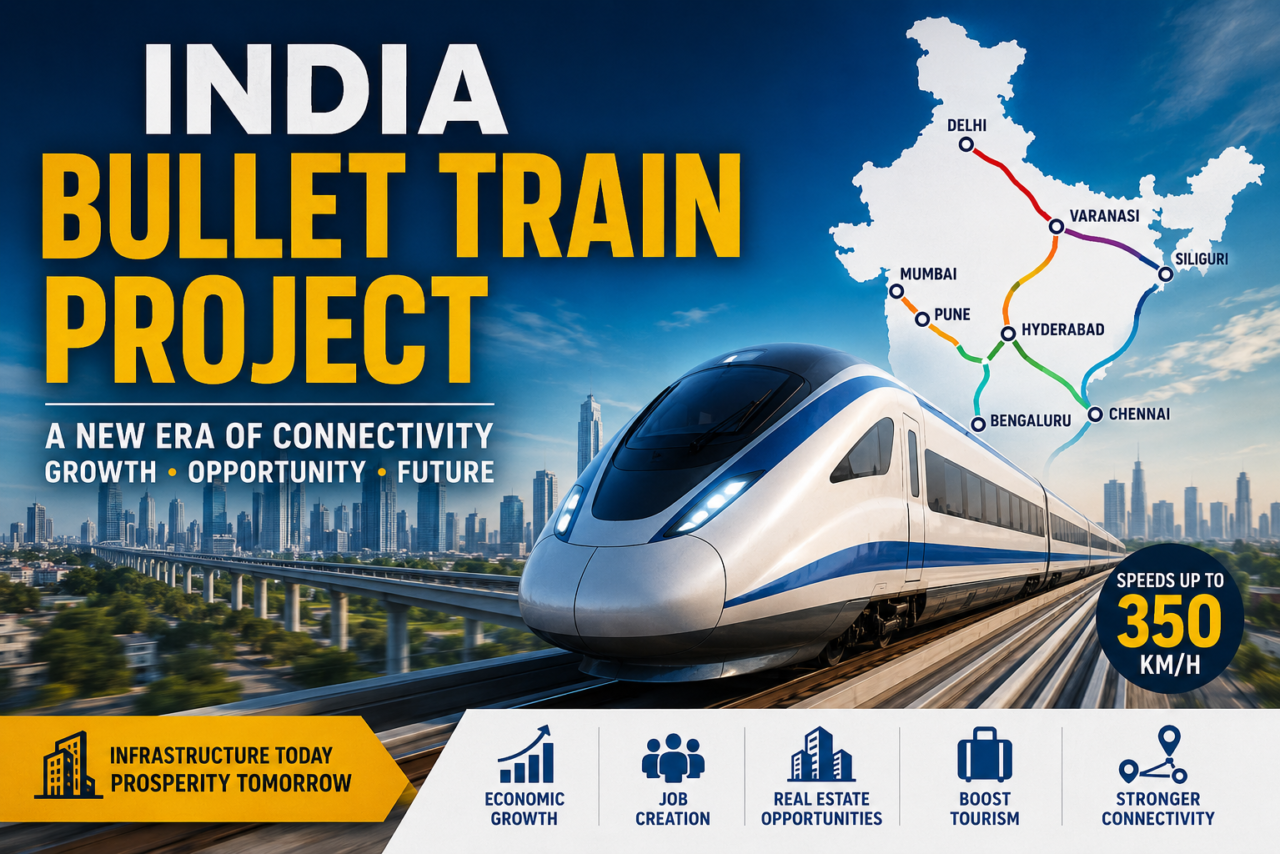

India is preparing for what could become one of the most ambitious infrastructure projects in its history. The government has cleared plans for seven new high-speed rail corridors spanning nearly 4,000 kilometres, with a proposed investment of approximately ₹16 lakh crore.
With trains expected to reach speeds of up to 350 km/h, the proposed India Bullet Train Project has the potential to dramatically reduce travel times between some of the country’s biggest economic and cultural hubs. While faster travel is the most visible benefit, the long-term impact could extend much further—supporting business growth, creating jobs, boosting tourism, and opening new opportunities in the real estate sector.
The proposed network aligns with the broader vision of the Ministry of Railways to modernise transportation infrastructure and improve connectivity across key economic regions of the country. Improved transportation networks have historically played an important role in supporting economic development, business expansion, and regional growth.
Proposed High-Speed Rail Corridors That Could Reshape India
The proposed network aims to connect several important cities across India through high-speed rail.
Some of the planned corridors include:
- Mumbai – Pune
- Pune – Hyderabad
- Hyderabad – Bengaluru
- Hyderabad – Chennai
- Chennai – Bengaluru
- Delhi – Varanasi
- Varanasi – Siliguri
If completed, these routes could significantly reduce travel times and improve connectivity between major commercial, industrial, and cultural centres.
For example, travel between Mumbai and Pune could take less than an hour, while Delhi and Varanasi could be connected in under four hours. Such improvements have the potential to transform how people travel, conduct business, and access new opportunities.
Why the India Bullet Train Project Matters
Infrastructure development has always been one of the strongest drivers of economic growth.
Whether it is airports, metro networks, expressways, or industrial corridors, improved connectivity often leads to increased business activity and regional development. The India Bullet Train Project could continue this trend by creating a faster and more efficient transportation network. As India continues investing in large-scale infrastructure projects, the focus on High-Speed Rail Development in India is expected to play an important role in improving connectivity, attracting investment, and supporting long-term economic growth.
The project could contribute to:
- Better business connectivity
- Faster movement of people
- Increased tourism
- Employment generation
- Regional economic development
- Greater investment opportunities
A stronger transportation network often encourages businesses to expand into new markets while helping cities become more attractive for investment.
How Infrastructure Projects Have Historically Boosted Real Estate
One important lesson from India’s development journey is that infrastructure and real estate often grow together.
Over the years, several major projects have transformed property markets across the country.
Examples include:
Delhi Metro
The expansion of Delhi Metro improved accessibility across NCR and contributed to increased residential and commercial development near metro corridors.
Dwarka Expressway
Areas surrounding the Dwarka Expressway witnessed significant real estate activity as connectivity improved and infrastructure development accelerated.
Noida International Airport
The upcoming airport at Jewar has already generated substantial investor interest across the Yamuna Expressway corridor, with many viewing it as a future growth destination.
Yamuna Expressway
Improved road connectivity helped unlock development opportunities and strengthened the region’s long-term investment potential.
These examples demonstrate how infrastructure projects can influence property demand and create new investment hotspots over time.
How the India Bullet Train Project Could Impact Real Estate
The India Bullet Train Project could become another major catalyst for real estate growth.
Improved connectivity often makes locations more attractive to businesses, homebuyers, and investors. Areas located near transportation hubs typically benefit from better accessibility and increased economic activity.
Potential real estate benefits could include:
Increased Residential Demand
People may choose to live in emerging locations if high-speed transportation allows them to remain well-connected to major cities.
Growth of Commercial Hubs
Businesses often prefer locations with strong transportation links. Improved connectivity could encourage the development of office spaces, retail centres, and business districts.
Higher Investor Interest
Infrastructure projects frequently attract investor attention due to their potential to improve long-term growth prospects.
New Urban Development Opportunities
Large transportation projects often encourage the development of integrated townships, mixed-use developments, and transit-oriented communities.
Could New Investment Corridors Emerge Around Bullet Train Stations?
Around the world, high-speed rail stations often become centres of economic activity.
Countries such as Japan and China have witnessed the growth of commercial districts, hotels, retail centres, and residential developments around major rail hubs.
A similar trend could emerge in India as high-speed rail infrastructure develops.
Future bullet train stations could potentially encourage:
- Commercial development
- Hospitality projects
- Retail expansion
- Office spaces
- Residential communities
While much will depend on final route alignments and development plans, transportation hubs often become focal points for future urban growth.
What This Means for Delhi NCR
For Delhi NCR, the proposed Delhi–Varanasi corridor is particularly noteworthy.
The region has already experienced significant growth due to infrastructure projects such as metro expansions, expressways, and airport developments. Improved connectivity through high-speed rail could further strengthen economic activity and accessibility.
Although the project remains in the planning and development stage, investors often monitor infrastructure announcements because they can provide valuable insights into future growth trends.
Conclusion
The India Bullet Train Project represents much more than a transportation initiative. It reflects India’s vision of building a faster, more connected, and economically integrated future.
Beyond reducing travel times, the proposed high-speed rail network could support business expansion, generate employment, encourage tourism, and create new opportunities for regional development. For the real estate sector, infrastructure projects of this scale often play a significant role in shaping future demand and investment patterns.
At Bansal Realty, we closely track major infrastructure developments, policy updates, and market trends that influence real estate opportunities across Delhi NCR. With over 40 years of experience in the property sector, we understand how connectivity and infrastructure can impact long-term investment potential. As India’s transportation landscape continues to evolve, staying informed can help buyers and investors make smarter real estate decisions.
FAQs
What is the India Bullet Train Project?
The India Bullet Train Project is a proposed high-speed rail network connecting major cities across India through trains capable of speeds up to 350 km/h.
How can the India Bullet Train Project impact real estate?
Improved connectivity can increase accessibility, encourage commercial development, and attract investment to emerging growth corridors.
Why do infrastructure projects influence property markets?
Infrastructure improves transportation, supports economic activity, and creates growth opportunities that can increase demand for residential and commercial properties.
Will Delhi NCR benefit from the proposed bullet train network?
The proposed Delhi–Varanasi corridor could strengthen regional connectivity and contribute to future economic and infrastructure growth.
Is the India Bullet Train Project already operational?
No. Most of the proposed corridors are currently in the planning and development stages and will require further approvals and implementation.


Leave a Reply